Región y país
Distrito de East Godavari, Andhra Pradesh, India
Historia
La empresa británica de confitería Cadbury introdujo el cacao en Andhra Pradesh en la década de 1960. En las décadas siguientes, la producción de cacao se expandió al delta del Godavari. El río Godavari, a menudo llamado Dakshina Ganga o «Ganges del Sur», ha moldeado el destino de las fértiles llanuras alrededor de Rajahmundry durante siglos. Su vasto delta, que se extiende hacia la bahía de Bengala, es uno de los paisajes agrícolas más abundantes de la India, salpicado de dorados arrozales y exuberantes cocoteros.
Bon-fiction es un galardonado fabricante de chocolate «del árbol a la tableta» de la región. El cacao se cultiva en la plantación familiar del fundador Akhil desde hace casi dos décadas, lo que constituye la base del trabajo de Bon-fiction en la región. Desde 2019, se ha establecido un centro de poscosecha en su finca para garantizar la consistencia en el sabor y la calidad.
Además de utilizar su propio cacao, Bon-fiction se abastece de más de 20 pequeños agricultores asociados. Todas las vainas se llevan a la finca para su fermentación y secado centralizados. El procesamiento centralizado no solo permite la consistencia, sino que también hace posible la trazabilidad completa desde la vaina hasta la bolsa.
La mayoría de las fincas tienen entre 4 y 9 acres y utilizan sistemas agroforestales, cultivando cacao bajo plantaciones de cocoteros. Los agricultores aplican prácticas agrícolas naturales como el vermicompost, cultivos de bacterias beneficiosas y el acolchado. Aunque no están certificadas como orgánicas debido a los costes, estas prácticas se ajustan estrechamente a los métodos orgánicos y regenerativos.
Cosecha
Septiembre - enero (cosecha principal) Abril - junio (cosecha intermedia)
Genética
Principalmente Forastero, con algunos árboles Trinitario y Criollo poco comunes.
Proceso postcosecha
La fermentación se lleva a cabo en cajas de madera durante 5-8 días con 3-4 vueltas.
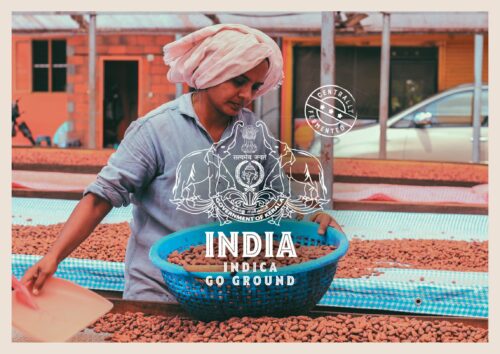
Los granos se secan en camas elevadas bajo secadores solares de túnel durante 6-8 días.
Perfil aromático
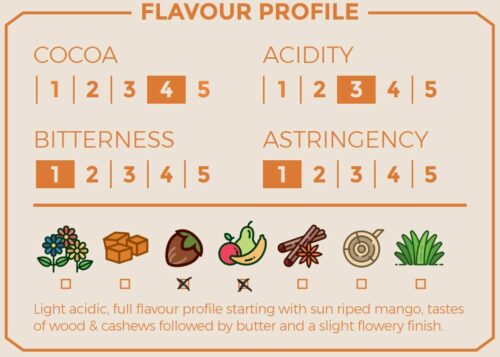
Acidez cítrica; notas de mango, frutas tropicales y rojas, regaliz, anacardos y cacahuetes.