Region und Land
Distrikt East Godavari, Andhra Pradesh, Indien
Geschichte
Das britische Süßwarenunternehmen Cadbury führte in den 1960er Jahren Kakao in Andhra Pradesh ein. In den folgenden Jahrzehnten breitete sich der Kakaoanbau bis ins Godavari-Delta aus. Der Godavari-Fluss, oft auch als Dakshina Ganga oder „Ganges des Südens” bezeichnet, prägt seit Jahrhunderten das Schicksal der fruchtbaren Ebenen rund um Rajahmundry. Sein ausgedehntes Delta, das sich in die Bucht von Bengalen erstreckt, ist eine der fruchtbarsten Agrarlandschaften Indiens, übersät mit goldenen Reisfeldern und üppigen Kokosnusshainen.
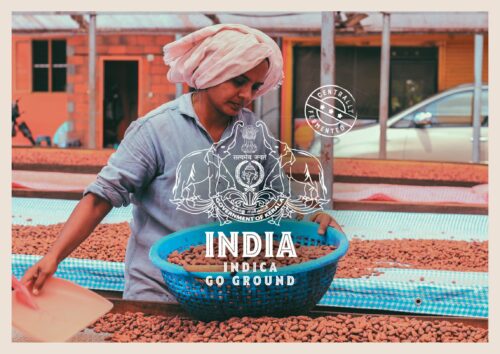
Bon-fiction ist ein preisgekrönter Hersteller von Tree-to-Bar-Schokolade in der Region. Seit fast zwei Jahrzehnten wird Kakao auf der Familienplantage des Gründers Akhil angebaut und bildet die Grundlage für die Arbeit von Bon-fiction in der Region. Seit 2019 wurde auf ihrem Anwesen ein Nacherntezentrum eingerichtet, um eine gleichbleibende Qualität und einen gleichbleibenden Geschmack zu gewährleisten.
Neben der Verwendung ihres eigenen Kakaos bezieht Bon-fiction auch Kakao von über 20 kleinen Partnerbetrieben. Alle Schoten werden zur zentralen Fermentierung und Trocknung auf das Anwesen gebracht. Die zentrale Verarbeitung ermöglicht nicht nur eine gleichbleibende Qualität, sondern auch eine lückenlose Rückverfolgbarkeit von der Schote bis zum Sack.
Die meisten Farmen sind zwischen 4 und 9 Hektar groß und nutzen Agroforstsysteme, bei denen Kakao unter Kokosnussplantagen angebaut wird. Die Bauern wenden natürliche Anbaumethoden wie Wurmkompost, nützliche Bakterienkulturen und Mulchen an. Obwohl sie aus Kostengründen nicht bio-zertifiziert sind, entsprechen diese Praktiken weitgehend den Methoden des ökologischen und regenerativen Landbaus.
Ernte
September - Januar (Haupternte) April - Juni (Zwischenernte)
Genetik
Hauptsächlich Forastero, mit einigen Trinitario- und seltenen Criollo-Bäumen.
Nachernteprozess
Die Fermentierung erfolgt in Holzkisten über einen Zeitraum von 5 bis 8 Tagen mit 3 bis 4 Wendevorgängen.
Die Bohnen werden auf erhöhten Betten unter Solartunnel-Trocknern 6 bis 8 Tage lang getrocknet.
Geschmacksprofil
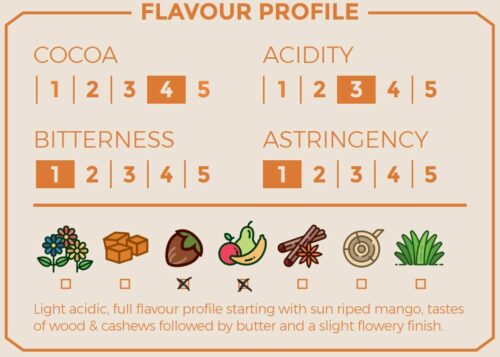
Zitrusfruchtige Säure; Noten von Mango, tropischen und roten Früchten, Lakritz, Cashewnüssen und Erdnüssen.