Region and Country
East Godavari District, Andhra Pradesh, India
Story
British confectionary company Cadbury introduced cacao to Andhra Pradesh in the 1960s. In the following decades, cacao production expanded into the Godavari delta. The Godavari River, often called the Dakshina Ganga or “Ganges of the South,” has shaped the destiny of the fertile plains around Rajahmundry for centuries. Its vast delta, fanning into the Bay of Bengal, is one of India’s most bountiful agricultural landscapes, dotted with golden paddy fields and lush coconut groves.
Bon-fiction is an award winning tree-to-bar chocolate maker in the region. Cacao has been cultivated in the family plantation of founder Akhil for almost two decades, forming the roots of Bon -fiction’s work in the region. Since 2019, a post-harvesting center was established at their estate to ensure consistency in flavour and quality.
Besides using their own cacao, Bon-fiction sources from over 20 partner smallholders. All pods are brought to the estate for centralised fermentation and drying. The central processing not only allows for consistency but makes full traceability from pod to bag possible.
The majority of farms are between 4 to 9 acres and use agroforestry systems, growing cacao under coconut plantations. Farmers apply natural farming practices such as vermicompost, beneficial bacterial cultures, and mulching. While not certified organic due to costs, these practices align closely with organic and regenerative methods.
Harvest
September – January (main crop) April – June (mid-crop)
Genetics
Mostly Forastero, with some Trinitario and rare Criollo trees.
Post Harvesting Process
Fermentation is carried out in wooden boxes for 5–8 days with 3–4 turns.
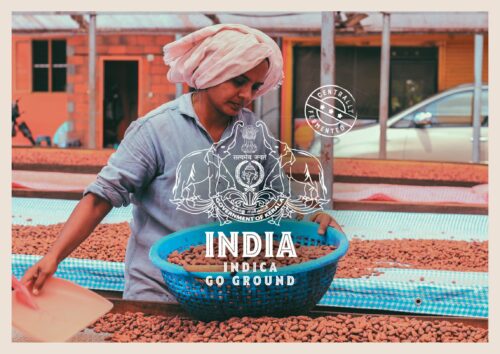
Beans are dried on raised beds under solar tunnel dryers for 6–8 days.
Flavour Profile
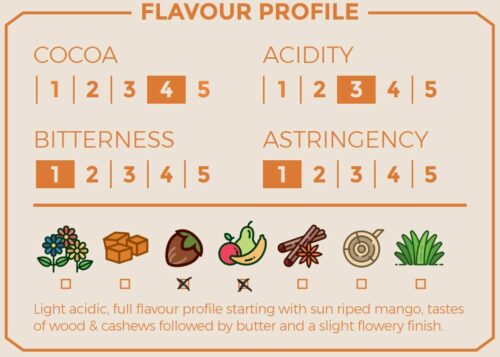
Citrus acidity; notes of mango, tropical and red fruit, liquorice, cashews and peanuts.