Région et pays
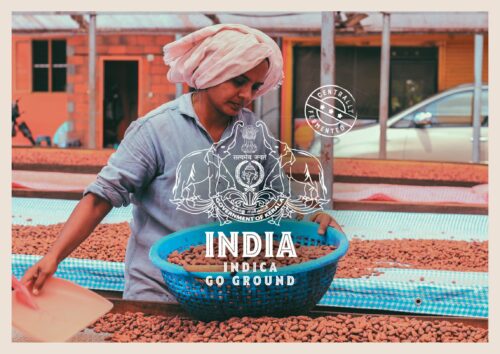
District d'East Godavari, Andhra Pradesh, Inde
Histoire
La société britannique de confiserie Cadbury a introduit le cacao dans l'Andhra Pradesh dans les années 1960. Au cours des décennies suivantes, la production de cacao s'est étendue au delta du Godavari. Le fleuve Godavari, souvent appelé Dakshina Ganga ou « Gange du Sud », a façonné le destin des plaines fertiles autour de Rajahmundry pendant des siècles. Son vaste delta, qui s'étend dans le golfe du Bengale, est l'un des paysages agricoles les plus fertiles de l'Inde, parsemé de rizières dorées et de cocoteraies luxuriantes.
Bon-fiction est un fabricant de chocolat « tree-to-bar » (de l'arbre à la tablette) primé dans la région. Le cacao est cultivé dans la plantation familiale du fondateur Akhil depuis près de deux décennies, formant les racines du travail de Bon-fiction dans la région. Depuis 2019, un centre de post-récolte a été créé dans leur domaine afin de garantir la constance du goût et de la qualité.
Outre l'utilisation de son propre cacao, Bon-fiction s'approvisionne auprès de plus de 20 petits exploitants partenaires. Toutes les cabosses sont apportées au domaine pour y être fermentées et séchées de manière centralisée. Le traitement centralisé permet non seulement d'assurer la constance, mais aussi d'assurer une traçabilité complète, de la cabosse au sac.
La majorité des exploitations ont une superficie comprise entre 4 et 9 acres et utilisent des systèmes agroforestiers, cultivant le cacao sous des plantations de noix de coco. Les agriculteurs appliquent des pratiques agricoles naturelles telles que le lombricompost, les cultures bactériennes bénéfiques et le paillage. Bien qu'elles ne soient pas certifiées biologiques en raison des coûts, ces pratiques s'alignent étroitement sur les méthodes biologiques et régénératives.
Récolte
Septembre - janvier (récolte principale) Avril - juin (récolte intermédiaire)
Génétique
Principalement des arbres Forastero, avec quelques Trinitario et de rares Criollo.
Processus post-récolte
La fermentation est effectuée dans des caisses en bois pendant 5 à 8 jours avec 3 à 4 retournements.
Les grains sont séchés sur des lits surélevés sous des séchoirs solaires à tunnel pendant 6 à 8 jours.
Profil d'arôme
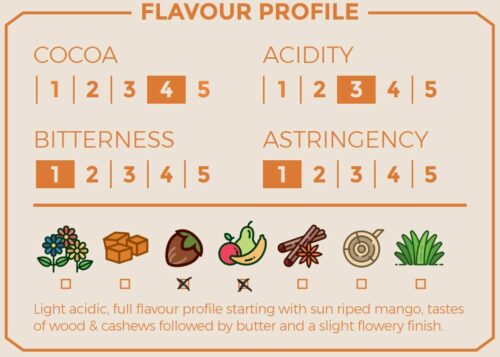
Acidité d'agrumes ; notes de mangue, de fruits tropicaux et rouges, de réglisse, de noix de cajou et de cacahuètes.