Region and Country
Chiang Mai and Lam Phun Provinces, Northern Thailand
Story
More than 100 years ago, Malaysian farmers brought cacao to Thailand in an exchange of ideas and products across the border.
During the 1950’s the national government invested in cacao with plans to make it an agricultural export. However, cacao was replaced by other more commercially valuable crops after the mid 1990's.
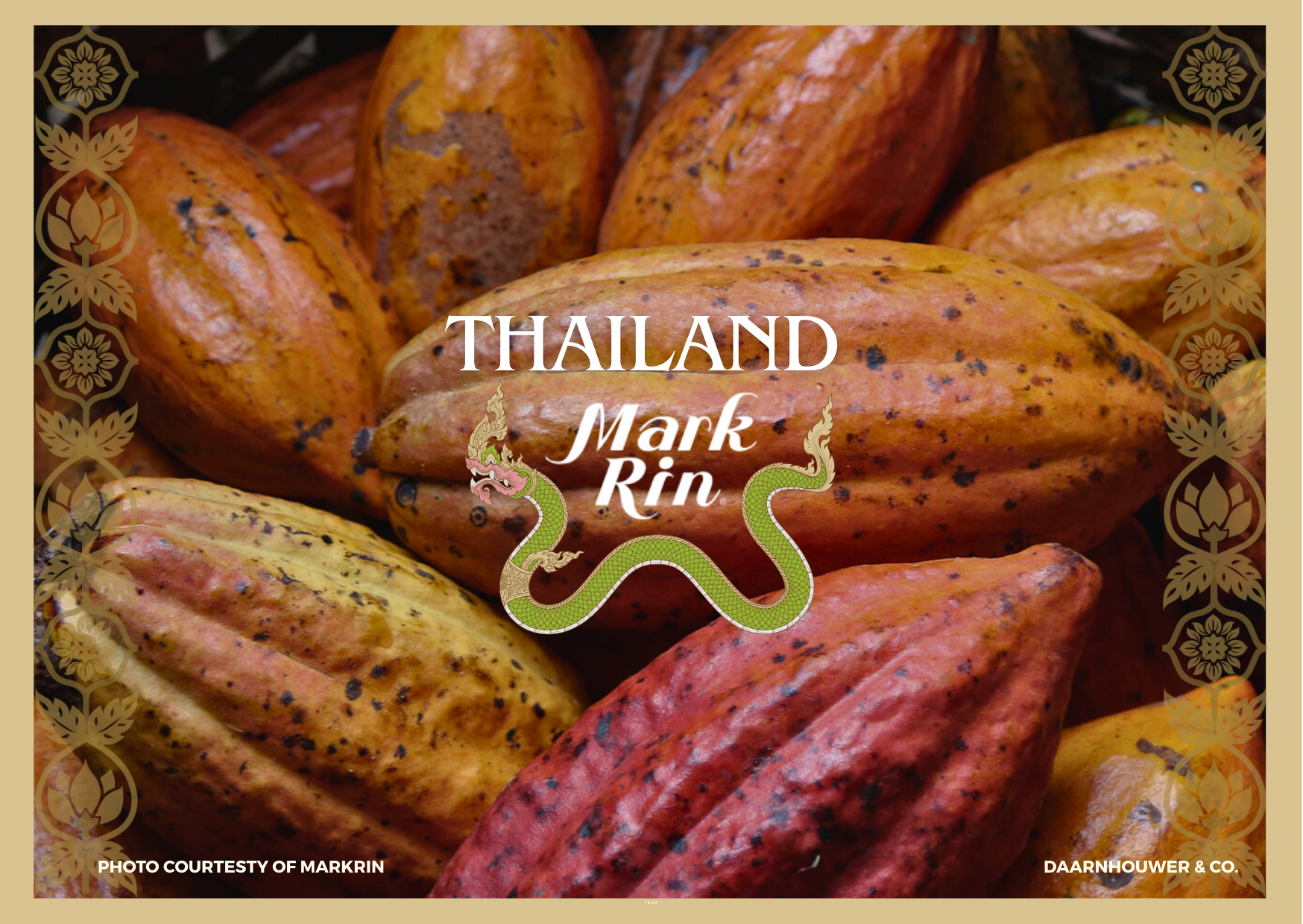
The situation did not deter small tree to bar and bean to bar brands to start popping up in Thailand. For over a decade, cacao production has gradually been increasing to meet the production needs of local chocolate producers. One of these brands is MarkRin Chocolate, a family-led business which not only produces high end chocolate and semi processed cacao products, but does so using cacao from one single hybrid developed by its owner and co-founder, Dr. San La-Ongrsi.
Dr. La-Ongrsi was an Associate Professor at the Horticultural Department of Maejo University for more than thirty years. During this period, he conducted extensive research on cacao and bred a hybrid which was perfectly suited to the growing conditions in Chiang Mai. He named the hybrid I.M.1 after his children: Mark and Irin. Together with Mrs. La-ongsri, post harvesting protocols for this specific hybrid were developed and extensively tested.
Nowadays, I.M.1 is grown in an intercropping system by more than 2000 farmers in 75 of the 77 provinces throughout Thailand. The cacao trees are grown along other cash crops like bananas, coconut, longan, rambutan, lychee, rubber, and other fruit trees. This cacao is used for the production needs of the MarkRin factory located in Chiang Mai. Cocoa represents a stable source of income for these producers.
Harvest
Throughout the whole year.
Genetics
I.M.1 - a mix of an ICS variety from Peru plus Criollo and Amelonado varieties from the Philippines.
Post Harvesting Process
Cacao collected from the farmers is brought to a centralized post-harvesting center. Fermentation is done in wooden boxes for an average of 7 days. Drying is done on average in 3 days. After drying, beans are sorted manually.
Flavour
Light body, light cocoa with notes of grass, hay tropical fruit (lychee), cream